 Two weeks ago my daughter and I went to the World Maker Faire in Queens New York, for what was a great day of inventors showing cool
new products of “stuff”. “Stuff” is the new digital and
for a guy who has always worked at the intersection of digital and physical, I
love this. Soon after we went through the rain and long line to enter we entered into the first
tent where projects for kids and adults were being led by enthusiastic 20
somethings in geek chic attire (more geek I must say than chic). A woman asked
Juliette (my 7 year old daughter) if she knew which president of the United
States was an inventor. Being arrogant (though not 7 as I sounded), I jumped in with the response saying “several
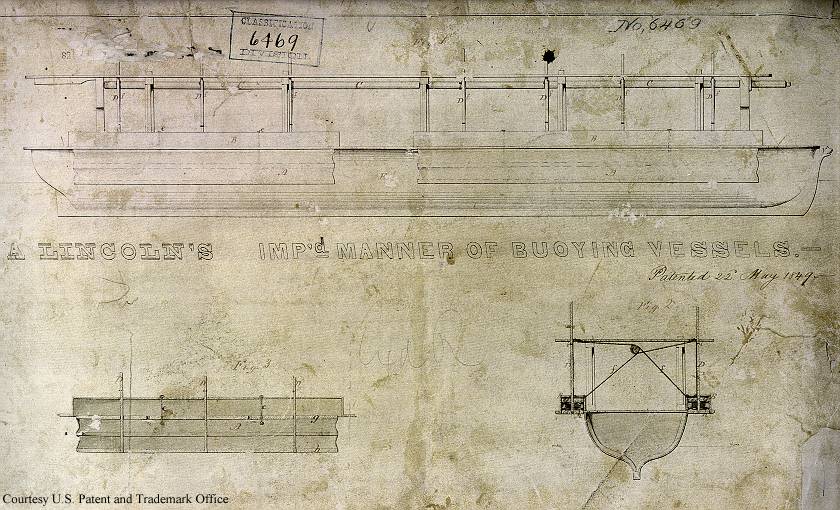
were inventors.” The woman handed us a card with a picture of a president on one side and a description on the other. She then corrected me by saying that it was only Abraham Lincoln who held a patent (a rather
obscure one actually, but not as obscure as my own patents. Read of his here). That was interesting to me, as with so many other makers
like myself it is not Lincoln we look to in American history as a
politician/innovator combo, but rather President Thomas Jefferson, and founding
father Benjamin Franklin. According to most accounts both of these would have
been more at home running a booth at the Maker Faire than representing the country in tax policy. Upon further reflection there is actually a
dichotomy that we are now facing, where we again look to these unpatented
inventors at the dawn of our nation to see where politics, bureaucratic stiffing, piracy
and invention collide. I think my surprise over Lincoln was not so much that he
had a patent, but that someone at the ideologically open source Maker Faire was
sharing this with pride. For me, someone who has authored 6 patents, I am always defending
what is perceived, lately especially, as being an old convention that limits
innovation rather than encourages it. The villainous Patent Troll must be a popular Halloween costume in Silicon Valley this year for example. What do we think of Lincoln then, and
what would Lincoln and the founding founders say to each other and to entrepreneurs and inventors in 2012?
Two weeks ago my daughter and I went to the World Maker Faire in Queens New York, for what was a great day of inventors showing cool
new products of “stuff”. “Stuff” is the new digital and
for a guy who has always worked at the intersection of digital and physical, I
love this. Soon after we went through the rain and long line to enter we entered into the first
tent where projects for kids and adults were being led by enthusiastic 20
somethings in geek chic attire (more geek I must say than chic). A woman asked
Juliette (my 7 year old daughter) if she knew which president of the United
States was an inventor. Being arrogant (though not 7 as I sounded), I jumped in with the response saying “several
were inventors.” The woman handed us a card with a picture of a president on one side and a description on the other. She then corrected me by saying that it was only Abraham Lincoln who held a patent (a rather
obscure one actually, but not as obscure as my own patents. Read of his here). That was interesting to me, as with so many other makers
like myself it is not Lincoln we look to in American history as a
politician/innovator combo, but rather President Thomas Jefferson, and founding
father Benjamin Franklin. According to most accounts both of these would have
been more at home running a booth at the Maker Faire than representing the country in tax policy. Upon further reflection there is actually a
dichotomy that we are now facing, where we again look to these unpatented
inventors at the dawn of our nation to see where politics, bureaucratic stiffing, piracy
and invention collide. I think my surprise over Lincoln was not so much that he
had a patent, but that someone at the ideologically open source Maker Faire was
sharing this with pride. For me, someone who has authored 6 patents, I am always defending
what is perceived, lately especially, as being an old convention that limits
innovation rather than encourages it. The villainous Patent Troll must be a popular Halloween costume in Silicon Valley this year for example. What do we think of Lincoln then, and
what would Lincoln and the founding founders say to each other and to entrepreneurs and inventors in 2012?
Here is the contradiction. The patent system is built
into our constitution, and for good reason. The discussion of Patent
protection and intellectual property was a part of the Constitutional Convention in 1787, and the movement proposed by James
Madison was "to secure to authors exclusive rights for a limited time".
It was adopted with very little dissent as a part of the commerce clause. All of this makes sense. Patents were a way for the new country to protect
the inventions of its citizens while at the same time making sure that those
inventions can be replicated and not lost to secrets once the inventor is no
longer alive. This is one reason I like patents. While it does create a short
term monopoly it also allows for long term free use. Until very recently my
thought was that inventors, and companies who have inventions coming out of
them, were faced with either creating a patent or keeping things as trade
secrets. A mix of these two things is used by nearly everyone in technology businesses including
the company I am CEO of Nanotronics Imaging. The idea of open source lives somewhere outside of these two choices that most of us face, but it did not
start with Linus Torvalds or Wikipedia, but rather has its roots as far back in
the United States as Benjamin Franklin and indeed our 3rd President.
Thomas Jefferson in a letter in 1813 said this of ideas:
Thomas Jefferson in a letter in 1813 said this of ideas:
“If nature has made any one
thing less susceptible than all others of exclusive property, it is the action
of the thinking power called an idea, which an individual may exclusively
possess as long as he keeps it to himself; but the moment it is divulged, it
forces itself into the possession of every one, and the receiver cannot
dispossess himself of it. Its peculiar character, too, is that no one possesses
the less, because every other possesses the whole of it. He who receives an
idea from me, receives instruction himself without lessening mine; as he who
lights his taper at mine, receives light without darkening me.”
This in itself doesn't speak to patents, but judging by the fact that he never applied or received one we can assume that he didn't think much of them, even if he had not oppose the inclusion of US patent law into the constitution. Similarly Franklin said of his inventions "As we enjoy great advantages from the inventions of others, we should be glad of an opportunity to serve others by any invention of ours; and this we should do freely and generously."
This in itself doesn't speak to patents, but judging by the fact that he never applied or received one we can assume that he didn't think much of them, even if he had not oppose the inclusion of US patent law into the constitution. Similarly Franklin said of his inventions "As we enjoy great advantages from the inventions of others, we should be glad of an opportunity to serve others by any invention of ours; and this we should do freely and generously."
The question that I have always had was whether
these ideas were scalable, as neither man needed patent royalties for personal
wealth or the survival of a business. Nor did they, as brilliant as
they were, provide an economic solution to open sourcing. Perhaps this is why
patent law remained, even with these grand gestures of two of the nations preeminent
founders and inventors. Maybe they could not think of how the romantic
notions of open source could create a nation of leading innovations.

Anderson starts out his new book with a wonderful story about his grandfather who was a towering influence in his life. His grandfather had invented a sprinkler system that was patented. Though he received royalties on that patent, they never made him a rich man. He was not an entrepreneur who created a company, but just a smart guy with an idea. This was how a tinkerer became an inventor most of the time. Anderson, in honor of his Grandfather, set out to create a sprinkler system in a Maker Movement way. He open sourced the idea, and created a terrific product that might turn out to be a thriving company. This is inspiring to many of us who dream about a lot of ideas, know we can’t do everything alone, and don’t want to hand it over to a bigger company. It is also something that Jefferson and Franklin would have very much liked.
Despite being the original American Makers, Jefferson and Franklin were not Thomas Edison. This is obvious, but they did create a world for Edison to be the most vigorous defender, and largest owner of patents in American history. So while Jefferson and Franklin were inventing in as open source of a manner as was conceivable in 18th and early 19th Century America, they were not creating large, sustainable businesses from those inventions. They were diplomats, journalists, scientists and politicians, but they did not spark a wave of industrialization through inventions. Can it be thought of that DIY is for hobbiests and small business but unrealistic for creating large businesses? Maybe. It would be hard to find a DIY tech business in the Fortune 500. Without the trade secret of Google’s search, ad and mapping algorithms, Google would not be a giant tech employer, and enabler of technologies and ideas for us all. If Apple hadn't patented those highly touchy screens, they would be less successful. If GE hadn't patented their medical imaging devices, they wouldn’t have spent the huge amounts of money to develop them. So our wealthy founding fathers who were incredible, being Utopian by night working on inventions that they would freely share, and pragmatic during the day when they approved the commerce clause.
So we are in
the luckier place than our heroes and technological
founding fathers, even though there remains many similarities. Our tool kits are better, not just because
Arduinos and 3-D printers are in them, but because with those items are a world
of collaborators available to share and participate in making our ideas better
than they were when they were just our ideas. Ultimately this may very well
work. My guess, and my own leaning are a mix of libertarian euphoria, communal
comfort and boring old pragmatism. That is what our tools are, the libertarian
Open Maker, the communal sharing limited monopoly of patents, and the
boring old practical way to protect ideas through secrecy. I think that in 2012
this is where we are. In 2050 I would guess that things will look a little
different. There will be less boring secrets. As we all know keeping
secrets with anything now is very hard. The mix of patenting and open sourcing
may move in the direction of the open source, but only if other regulations than
just patent law change. There is less friction than ever to open a small
business in some areas. Opening a website for just about anything or creating
an app is practically something anyone can try. There are however much larger
barriers for entry into the world word of making stuff, even if actually
putting them together gets cheap. Think of those Edison inventions for
instance. Creating the incandescent light was not about just creating the bulb itself. It involved huge political hurdles, and infrastructural issues to become
practical. When those changes occurred they were the start of what would
become General Electric, a company creating enormous wealth, and employing 500,000 and more people at any given time. Moving ahead 100 years just within
that one company GE invented an MRI imaging machine that is used in hospitals
around the world. It also created wealth and jobs, but it required FDA
approval, and years of Hospital buy-in. These two inventions, it could be
argued, would never have had a commercial viability as open source projects,
and therefore would never have been funded. They would never have created so
many jobs, and have enabled technological revolutions that far exceed our ideas of
technological disruptions.
Juliette gave
me the Abraham Lincoln card about his invention that was handed to us at the
Maker Faire. It sits on my desk as a reminder to balance my responsibilities. I
think that no matter how many great new inventions we saw at the Maker Faire it
was this card that has the largest impact on me.

