Showing posts with label nanotronics Imaging. Show all posts

Sunday, April 28, 2013

On Fast and Slow Failure and Success


I knew only the most basic business strategy of Tech Pro. This was a company that my parens started in 1983 that much later I owned with them and my cousin. The reason I knew so little was that I was only 9 years old. The reason I knew any at all was that I didn’t have to go far that year to learn about Tech Pro. The room, formally a playroom of sorts, had become the “Tech Pro Room”, as it was home to a new dedicated telephone line,  a computer with 64k of RAM and surprisingly a modem to order parts. Our garage was a workshop where my father took in the first of a series of old instruments from shuttered factories, with the purpose of restoring and computerizing them. The kitchen table was not only where I ate my breakfast, but where I worked on my first start-up job, doing Quality Control testing of Tech Pro instruments. The company was financed through seed money from my parents and a small loan from my grandfather. My parents have pointed out that while this seed money was not a lot of money, it was all of the money they had. This money went directly to buy these old instruments. Within the first year of business the company was modestly profitable. Within the first 5 years, the business was comfortably supporting my family, and had managed to computerize a small industry.  Tech Pro was never large, but Tech Pro was international. It employed a great group of talented engineers, many who did not have college degrees but did have creativity and dedication. Tech Pro took me and my family around the world, and introduced us to most of our friends for 25 years. We then sold the company in 2008.

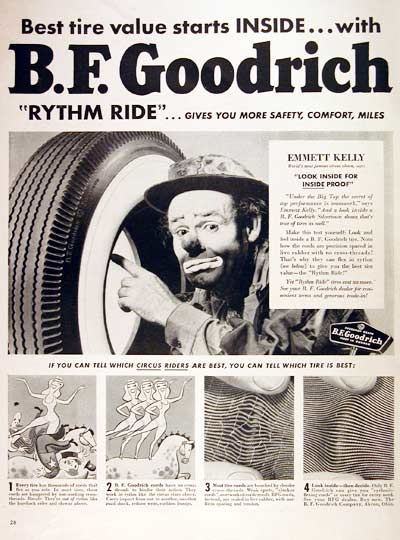
All of this is likely of little interest to you, as Tech Pro is not Hewlett Packer, Apple or Google. It was just a family business that was able to see technological trends early, and create a thriving business based on them. What is interesting to me is to try to understand why this model is not a particularly common one anymore, and where it falls in the spectrum of “expert” advice from tech industry gurus. My friend and fellow board director of our new company (Nanotronics Imaging) Gerry Ohrstrom,  trying to describe our new business and me in particular said  something like “Matthew is a bottom up guy mostly, but also kind of a top down guy too”, which he of course knows. By bottom up he meant that the company was funded initially by us and through revenue like Tech Pro was.  My father is again my partner. We did follow a bit of the Tech Pro example, but this time I felt that we should bring in outside investors (Gerry included), hence being  top down too. It is too early to tell, but this seems to be a nice mix, though not as clear as the one my parents used with Tech Pro. The goals for the new venture are much larger, and therefore the perceived risk and the cost are greater. At least this story provides me with a good justification for being bottom up and top down. I have though been wondering if this is at all common anymore. It used to be. HP, GE, Intel and most early Silicon Valley companies worked in somewhat this fashion. I told the story of BF Goodrich here, where a man with an idea, some patents, a little money and some helpful investors started a 19th Century business that would become global and very large. The corporate histories of DuPont, Monsanto and countless others of that era are very similar. Despite the overwhelming odds, these companies are still in existence. So why is this model now not considered normal?

I was recently invited to a lunch to discuss an idea a friend has for a science business. I wasn’t the only one invited, but it was clear why I was, since I am the CEO of a science business, not too dissimilar from what the friend wanted to start. The problem with these kinds of meetings that involve any form of advice  is that I am in the middle of the process myself and therefore it is very difficult to have a prospective from the outside, even if it is about someone else’s idea. I have extreme myopia, which I break best from when I am talking about businesses that are completely unrelated to mine. That said, I tried to remember common wisdom about launching a business, which isn’t terribly difficult to do at this moment as I am in the midst of this myself.  I consider my bottom up  and top down approach somehow very old fashioned, and yet very uncommon at the same time. It is not documented as neatly as other models by most contemporary start-up strategists that I have read (though I don’t read all for sure.).  I first assume the things everyone assumes. That is the validity of the disruptive idea (yes, despite saying that I don’t get my advice from gurus, I did read and liked very much the Clayton Christiansen books), the inventions themselves, the basic competitive landscape and all else that seems common sense now.

There is though a view exemplified by the almost cliché concept that since it is not as expensive to start a business as it used to be, due mainly to cloud servers and rapid open source development platforms, everyone should do it. (As a bit of a side note, this is really only true for certain companies. It is still expensive to start companies that make complicated "stuff" rather than those that rely on internet resources only). As the risk is small, the thought is that there is very little downside to trying. Also, because of this a young person can try many ideas in one lifetime, as failure is less risky. Though he may not have been the first to say it, the blogger and prolific book author Seth Godin famously wrote “fail fast and fail cheap. Fail in a way that doesn’t kill you.” This advice was repeated in a recent conversation between Nassim Taleb and Daniel Kahneman, where Taleb stresses this as a fundamental strength of Silicon Valley start-up culture. He was, I believe, thinking of this as a risk mitigation plan. From the Taleb perspective this makes perfect sense. It is true that most businesses fail, and even if the odds were better it would be unlikely that the odds would be so good as to eliminate luck playing a critical role in the success or failure of a business. He is right in this very rational way, and if I wasn’t looking at this from a lifetime on the inside of start-ups, I would take the same rational view. The problem though is not one of expectations from the outside but the one from the inside. It is that position my parents were in in 1983 and that I am in now. It is also the position that more young people ever in technology are in, and from that perspective, every day that we wake up and think about failing fast, or even failing cheap we are failing in a much more profound way than Godin or even Taleb are suggesting. We are failing to risk what we should be risking. For every customer who buys a product that might become obsolete from our failures our failure as a business is a failure to them. This is true for every employee, no matter how much the employee knows she is taking a risk by working for a start-up. We are also failing the investors, even if those investors expect that they may lose the money.

When I think about the cheap part of Godin’s statement, I am reminded by the how little Tech Pro cost to start. Still, it never felt to me like failure was even a mildly uncomfortable option. It seemed dire. Even though my father had excellent career opportunities if Tech Pro did fail, it is hard for me to imagine him thinking about this much as he installed instruments that his customers were relying on. The stakes were too high. Though this is a very personal thing to recall, and may very well have lead me to large enough psychotherapy bills over the years to finance a start-up itself, I remember my mother’s panic the Christmas that Tech Pro was started. They gave me my dream present, an Atari 2600 video console, but not without instilling a feeling of dread which hung over the machine. Mom said “I hope you enjoy this, because Dad just quit his job to start Tech Pro. We may not be able to buy you such a nice gift again.” This comment was not a joke, as her tears were not tears of laughter, but rather it was a statement of commitment. She wasn’t saying this because she felt that Tech Pro would fail. If Tech Pro failed fast and failed cheaply my father would have gotten another job right away, and the following Christmas I would have had another nice gift. Instead the passion became an innovation, the innovation became a company, the company became a responsibility and ultimately that responsibility became success and created far more for far more people than just more Christmas presents for me.

So as I write this I wonder if there is any point of disagreement with contemporary common wisdom. What I come up with is that failure is of course a strong possibility, and that possibility should not stop someone from starting a business. That same failure though, no matter how cheap it appears can never be thought of in those terms. There is a ripple effect in all of the lives we touch when starting a business. That ripple can capsize boats, or guide them like an explorer’s ship to new lands. There is nothing more exciting, but if done right it is both slow and expensive. It is a lifetime that we are lucky enough to likely fail at.

Tuesday, October 16, 2012

Historically Making the Future


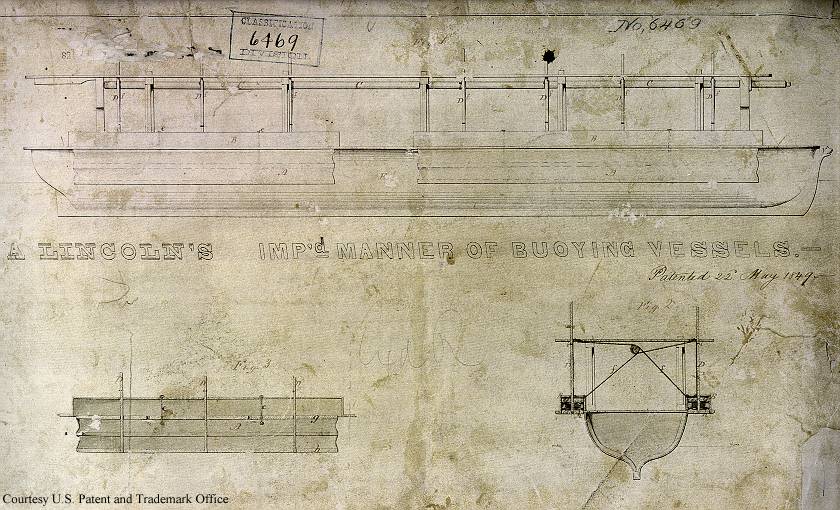
Two weeks ago my daughter and I went to the World Maker Faire in Queens New York, for what was a great day of inventors showing cool new products of “stuff”. “Stuff” is the new digital and for a guy who has always worked at the intersection of digital and physical, I love this. Soon after we went through the rain and long line to enter we entered into the first tent where projects for kids and adults were being led by enthusiastic 20 somethings in geek chic attire (more geek I must say than chic). A woman asked Juliette (my 7 year old daughter) if she knew which president of the United States was an inventor. Being arrogant (though not 7 as I sounded), I jumped in with the response saying “several were inventors.” The woman handed us a card with a picture of a president on one side and a description on the other. She then corrected me by  saying that it was only Abraham Lincoln who held a patent (a rather obscure one actually, but not as obscure as my own patents. Read of his here). That was interesting to me, as with so many other makers like myself it is not Lincoln we look to in American history as a politician/innovator combo, but rather President Thomas Jefferson, and founding father Benjamin Franklin. According to most accounts both of these would have been more at home running a booth at the Maker Faire than representing the country in tax policy. Upon further reflection there is actually a dichotomy that we are now facing, where we again look to these unpatented inventors at the dawn of our nation to see where politics, bureaucratic stiffing,  piracy and invention collide. I think my surprise over Lincoln was not so much that he had a patent, but that someone at the ideologically open source Maker Faire was sharing this with pride. For me, someone who has authored 6 patents, I am always defending what is perceived, lately especially, as being an old convention that limits innovation rather than encourages it.  The villainous Patent Troll must be a popular Halloween costume in Silicon Valley this year for example. What do we think of Lincoln then, and what would Lincoln and the founding founders say to each other and to entrepreneurs and inventors in 2012?

Here is the contradiction. The patent system is built into our constitution, and for good reason. The discussion of Patent protection and intellectual property was a part  of the Constitutional Convention in 1787, and the movement proposed by James Madison was "to secure to authors exclusive rights for a limited time". It was adopted with very little dissent as a part of the commerce clause. All of this makes sense. Patents were a way for the new country to protect the inventions of its citizens while at the same time making sure that those inventions can be replicated and not lost to secrets once the inventor is no longer alive. This is one reason I like patents. While it does create a short term monopoly it also allows for long term free use. Until very recently my thought was that inventors, and companies who have inventions coming out of them, were faced with either creating a patent or keeping things as trade secrets. A mix of these two things is used by nearly everyone in technology businesses including the company I am CEO of Nanotronics Imaging. The idea of open source lives somewhere outside of these two choices that most of us face, but it did not start with Linus Torvalds or Wikipedia, but rather has its roots as far back in the United States as Benjamin Franklin and indeed our 3rd President. 

Thomas Jefferson in a letter in 1813 said this of ideas: 
“If nature has made any one thing less susceptible than all others of exclusive property, it is the action of the thinking power called an idea, which an individual may exclusively possess as long as he keeps it to himself; but the moment it is divulged, it forces itself into the possession of every one, and the receiver cannot dispossess himself of it. Its peculiar character, too, is that no one possesses the less, because every other possesses the whole of it. He who receives an idea from me, receives instruction himself without lessening mine; as he who lights his taper at mine, receives light without darkening me.”

This in itself doesn't speak to patents, but judging by the fact that he never applied or received one we can assume that he didn't think much of them, even if he had not oppose the inclusion of US patent law into the constitution. Similarly Franklin said of his inventions "As we enjoy great advantages from the inventions of others, we should be glad of an opportunity to serve others by any invention of ours; and this we should do freely and generously." 

The question that I have always had was whether these ideas were scalable, as neither man needed patent royalties for personal wealth or the survival of a business. Nor did they, as brilliant as they were, provide an economic solution to open sourcing. Perhaps this is why patent law remained, even with these grand gestures of two of the nations preeminent founders and inventors. Maybe they could not think of how the romantic notions of open source could create a nation of leading innovations. 
Chris Anderson (of Wired Magazine, not TED, fame) comments on the power of Makers both in numerous Wired articles and his new book Makers: The New Industrial Revolution.  Anderson speaks both as a prophet and the messiah of Makers, and he is in a great position to do so. Not only is he the Chief Editor at Wired, but he has two start-ups that very much grew up in the style of the Maker/DIY movement. Most importantly they use micro-controllers called Arduino, which have taken a rather old kit concept and made a powerful electronics tool. The way this is possible, as my father (a Maker not only now but of the 70’s and 80’s Homebrew Computer Club era) claims is the internet. The internet has of course allowed for rapid creation of social networks, searching, and democratized publishing (I am actually publishing these thoughts just because I want to), DIY commerce and DIY products. Arduino and 3-D printers are just two examples that use Wikipedia style collaboration to enable the creation of stuff. In addition to patents and trade secrets, Nanotronics Imaging also uses Arduino and other open source tools happily and more often every day. 

Anderson starts out his new book with a wonderful story about his grandfather who was a towering influence in his life. His grandfather had invented a sprinkler system that was patented. Though he received royalties on that patent, they never made him a rich man. He was not an entrepreneur who created a company, but just a smart guy with an idea. This was how a tinkerer became an inventor most of the time. Anderson, in honor of his Grandfather, set out to create a sprinkler system in a Maker Movement way. He open sourced the idea, and created a terrific product that might turn out to be a thriving company. This is inspiring to many of us who dream about a lot of ideas, know we can’t do everything alone, and don’t want to hand it over to a bigger company. It is also something that Jefferson and Franklin would have very much liked.

Despite being the original American Makers, Jefferson and Franklin were not Thomas Edison. This is obvious, but they did create a world for Edison to be the most vigorous defender, and largest owner of patents in American history. So while Jefferson and Franklin were inventing in as open source of a manner as was conceivable in 18th and early 19th Century America, they were not creating large, sustainable businesses from those inventions. They were diplomats, journalists, scientists and politicians, but they did not spark a wave of industrialization through  inventions. Can it be thought of that DIY is for hobbiests and small business but unrealistic for creating large businesses? Maybe. It would be hard to find a DIY tech business in the Fortune 500. Without the trade secret of Google’s search, ad and mapping algorithms, Google would not be a giant tech employer, and enabler of technologies and ideas for us all. If Apple hadn't patented those highly touchy screens, they would be less successful. If GE hadn't patented their medical imaging devices, they wouldn’t have spent the huge amounts of money to develop them. So our wealthy founding fathers who were incredible, being Utopian by night working on inventions that they would freely share, and pragmatic during the day when they approved the commerce clause.

So we are in the luckier  place than our heroes and technological founding fathers, even though  there remains many similarities.  Our tool kits are better, not just because Arduinos and 3-D printers are in them, but because with those items are a world of collaborators available to share and participate in making our ideas better than they were when they were just our ideas. Ultimately this may very well work. My guess, and my own leaning are a mix of libertarian euphoria, communal comfort and boring old pragmatism. That is what our tools are, the libertarian Open Maker, the communal sharing  limited monopoly of patents, and the boring old practical way to protect ideas through secrecy. I think that in 2012 this is where we are. In 2050 I would guess that things will look a little different. There will be less boring secrets. As we all know keeping secrets with anything now is very hard. The mix of patenting and open sourcing may move in the direction of the open source, but only if other regulations than just patent law change. There is less friction than ever to open a small business in some areas. Opening a website for just about anything or creating an app is practically something anyone can try. There are however much larger barriers for entry into the world word of making stuff, even if actually putting them together gets cheap. Think of those Edison inventions for instance. Creating the incandescent light  was not about just creating the bulb itself. It involved huge political hurdles, and infrastructural issues to become practical. When those changes occurred they were the start of what would become General Electric, a company creating enormous wealth, and employing 500,000 and more people at any given time. Moving ahead 100 years just within that one company GE invented an MRI imaging machine that is used in hospitals around the world. It also created wealth and jobs, but it required FDA approval, and years of Hospital buy-in. These two inventions, it could be argued, would never have had a commercial viability as open source projects, and therefore would never have been funded. They would never have created so many jobs, and have enabled technological revolutions that far exceed our ideas of technological disruptions.

Juliette gave me the Abraham Lincoln card about his invention that was handed to us at the Maker Faire. It sits on my desk as a reminder to balance my responsibilities.  I think that no matter how many great new inventions we saw at the Maker Faire it was this card that has the largest impact on me.


Saturday, August 4, 2012

The Beastie Boys for Technologists


Dan Le Roy wrote a book recently chronicling the making of the Beastie Boys’ Album “Paul’s Boutique” in 1989, which I just read. The Beastie Boys’ are not my favorite of musical groups, or even my favorite rap band, but I have a certain fascination and respect for them  as a middle class New York group who helped define something very critical to my generation. Strangely, though I was deeply embedded in hip hop at the time as a DJ myself (of no success in Akron Ohio), I soon after turned to the older generation for identification, even the father of Beastie Boys’ member Adam Horovitz, the playwright Israel Horovitz who I worked with and became friends with.  As my life moved from free-lance DJ to producer, to entrepreneur to physicist, I somehow lost track of what made my generation’s contributions possible, and how they ultimately affected me.

The story of “Paul’s Boutique” is a biography about how a new technological emergence and art form combined with the right talent to create an album would help define a unique generational voice. What isn’t spelled out as clearly is how that very same movement, that of mixes, overlays and samplings is actually the musical equivalent of technological convergence that I and others in my generation have embraced. Perhaps this is a stretch, but I don’t think so.

The key to making rap more than rhymes and simple rhythms lies in a complex looping and sampling of a wide array of existing musical tracks, precisely controlled by the engineer or DJ to provide the textures for rhythm and rhyme. This isn’t uniquely an invention of rap, as sampling goes back to Bach and before. What makes this different is the ability for technology to allow for control of more elements than were ever possible before. The synth and sync were like Bach’s organs for the Beastie Boys and their partners in the making of “Paul’s Boutique”. Within just two years the top 10 were full of music in this vein. On a bit of a side note, sampling still exists in major commercial releases but it has largely been replaced by something more generic which are songs that all sound the bloody same. Like so many other things DJing and sampling have now been elevated to a high art, meant for a smaller but respectful audience. DJSpooky (Paul Miller) for example has sampled everything from musical tracks to the cracking of the icecaps in Antarctica. He has even written books published by MIT Press. So my generation, which Paul is a part of, is no longer seen as drinking  partiers, but as innovators and artists. (who do coincidentally like to drink and party).

It is not my goal to promote my own company or inventions, but since I understand them a little bit better than other people’s inventions I have to use them here. I am sorry for any appearance of self-promotion as I hate when people do this. My blogs are not advertisements.  Still I have this little company that is growing, and enjoining doing something that my generation was cut out to do. We make microscopes that have qualities that other microscopes don’t, mainly due to the many software features that we have invented. When I say invented, this is only part of it. I mostly say we invent and we converge. That is we use the most interesting hardware available, and even existing coding languages to make something completely unique. This is called convergence in technology, but it could be called mixing just as easily. What the Beastie Boys were doing in a studio with new machines and old albums, along with unique voices we are doing in small labs and on computers. Perhaps this type of mixing is why my generation can innovate in a world of steep competition from younger innovators, who in so many ways have the technological advantage of growing up with tools already in place.

So next time I listen to the songs of my adolescence I won’t listen only with nostalgia, but with an eye towards the future. I will look for inspiration, not to create a rap record, but to create something, whether it be a new type of Artificial Intelligence, a space ship or just a better microscope.

Tuesday, July 31, 2012

Making The New Writer


Oscar Wilde  said “ No great artist ever sees things as they really are. If he did, he would cease to be an artist.” Science writers are now artists rather than journalists for the most part, so perhaps this applies. This is also the reason that one of my favorite science writers is so artistically good. The first thing I read this morning was that the writer Jonah Lehrer had resigned from the New Yorker due to false quotes about Bob Dylan and others that he had put in his book “Imagine”.  I have several feelings about this, all of which seem strangely personal. The first is that I quote Lehrer many times in my blogs, and now feel that perhaps my own writing has been compromised. Secondly I feel bad for Jonah. I sympathize with him. He is young, and ascended rather quickly as an important writer of science based books, a blog and as a journalist for the New Yorker and Wired. While that is an enviable position, it is also hard to keep up with expectations. This is unfortunately a modern day pressure for popular success in almost any intellectual field. The polymath is touted, and not merely for the polymathic abilities he possesses but for the ability to communicate those ideas clearly to a mass public who in general are not so intellectual themselves. Finally though Jonah is representative of something that seems to be just appearing in the public consciousness, which is that few people know as much as they claim.

Before I even read the news of Jonah’s fall from the Mount Olympus of science popularization (that was my attempt to sound smart by blending pseudo knowledge of ancient Greece, with bland witticism for example) , I was listening to a new Podcast called “You Are Not So Smart”. The podcast is exactly the counter to the Jonah Lehrer problem, which is to point out that while even product descriptions use insane techno babble, most everyone can’t actually do much of anything anymore, or even explain how things are done. Who understands the way a microwave works for instance? Or how an airplane flies? On a side note my friend Paul Roossin pointed out to me that even though I thought I knew why a plane has lift I was wrong. It is the wing design that makes up most of the lift not the fabled  Bernoulli principle  So even though I am a physics professor I didn’t know the basic physics of aviation. What about making things? How many of us who work in the computer industry could assemble a computer? In the 1980s we all could.

But I refuse to be a cynical old man, and luckily I don’t need to. We are starting to see the reemergence of a time where doing is cooler than babbling. There are large movements such as the maker movement, which is as it sounds. It is exemplified by a series of Maker Faires where inventors and small companies show crafted devices made with new tools such as 3D printers and  micro controllers called  Arduino which allows for control of everything from motors to LEDS. This movement extends to biology, where companies such as Genspace have a make shift lab doing important research that even pharma and biotech are not doing. Actually if you look at an old building in Brooklyn called 33 Flatbush, the entire place is made up of doers such as roboticists, urban farmers, filmmakers and architects.  My company Nanotronics is full of makers, and most encouragingly some young ones including Dylan Fashbaugh who started early in life as a rocket builder and moved through differential equations at rocket speed , and now makes things for us including controllers. And he is still in college with us as an co-op.

I am sentimental towards the maker as my dad is a classic maker, having built a testing lab with his uncle, cousin and parents from used parts. I am also sentimental towards the intellectual, as I am not a good maker. I read and write, and rarely get my hands dirty. I am not proud of this, but it is the sad truth. Lucky for me I think that we are in a time where even a clumsy guy like me can build things. I can write code. I can program and I can use a 3D printer. If I do these things with my background .maybe I and so many others like me can actually write articles and books without the need to make up stories, because instead of stories we have made designs and products.

Thursday, June 7, 2012

Flying with Ray

I have been listening to a lot of NPR over the last few days since I have been driving so much to visit customers. I should be forced to do this more often (as I am sure I will be), as I get to catch up on all of those things I have become uninterested in due to time, and annoyance, such as politics. I was recently at book party with a friend who is an astrophysicist, and the writer of the book was speaking about the political landscape during this pre-presidential election period. This friend seemed to not be paying much attention. I asked her what she thought about the writer’s ideas, to which she responded “Oh I am sorry, I wasn’t paying attention. I am not so interested in local politics, and by local I mean the earth.” She should coin this quote, but I will leave it to her to accept or deny. I loved this, and actually I have always obsessed over politics, but truthfully without much real interest, just frustration, so I have turned to other things to occupy my obsessions. So, most of NPR was politics, but there was something that happened yesterday that extended beyond the local of my physicist friend, and that is the death of Ray Bradbury, who while of this planet was a sci-fi writer that looked far  beyond.  There was a great quote that someone mentioned of Bradbury’s which may be the best thing I heard all day. Once Bradbury was asked about how to do something really important, and he said “jump off of a high cliff, then build your wings on the way down.” It gave me a bit of a chill because it struck me not as a poetic piece of advice from of writer, but also something that we have been living with our company Nanotronics Imaging. We took a leap about a year ago, and are flying now, though perhaps not as high as we would like yet. This seems like obvious advice for an entrepreneur, and it is one that is getting popular with Eric Ries's ideas on the Lean Start-up, but traditionally this not how things have been done. Usually a product is built, refined and released. We don’t do things that way. We jump, and build wings. This means that we partner with customer, give them what we have and improve on that daily. It means constant iterations. It means improving until we have the best products on the market, and then still not being happy until we are better.. This is constant beta mode, agile development, but as Bradbury points out it also involves many moments of free-fall, which we all are in from time to time (ok almost daily).

So, this is just a short thank you to the now late Bradbury for not only creating great fiction, but also entering into the realm of business inspiration for me. Though he considered himself a writer of fantasy, his ideas are becoming scientific reality thanks to his own jumping, and flying.

Friday, February 3, 2012

Viruses for All


The more public a scientific panel discussion is the more boring it tends to be. People are so polite to each other, that if you go to too many of these you start wanting the intellectual equivalent of Jerry Springer rather than Oprah Winfrey. This is not because I love fights, though I sort of do (boxing is my favorite sport after all), but because there is controversy and disagreement in nearly every area of science. In technical conferences where there are 100 people in attendance, people feel free to debate. In more public forums, they are cautious. Luckily for me, this doesn’t seem to be the case with the topic of devastating pandemic research. Last night at The New York Academy of Sciences, Ian Lipkin, of infection disease fame, and the chief science advisor on the film “Contagion”, moderated a panel to discuss the implications of the recent H5N1 controversy. It would be hard for anyone to have missed this basic issue, as the media has picked it up fairly broadly, so I won’t go into in detail here. The main issue in summary is that a group of scientists, Dr. Fouchier and coauthors, created a form of influenza in ferrets which some say has the potential to spread to humans. That is the H5N1. The paper was submitted for publication in the world’s top two journals “Science” and “Nature”, and the paper sent on to a group called the NSABB which reports biology risks to the government. Because of the seriousness of the information on how to perform this experiment was deemed too risky, the paper was not published, and a 60 day waiting period on doing any further research on H5N1 was put in  place while policy can be discussed. On the panel at NYAS were members of NSABB, well know Virologists, the Editors of both Nature and Science, and others. It was world class. Most importantly it was a debate that oscillated between the practical and philoshophical scientific responsibility, public health and progress. Carl Zimmer writes about the details of the conversation here.

I am adding my two cents as I often do, as an outsider. I am a scientist, I have written peer reviewed papers, but I know practically nothing about infectious disease. Yet when I hear about censorship to protect civilisation I pay attention. Shouldn’t we trust the experts who say better safe than sorry? Also shouldn’t there be expert arbiters of the information, so that bioterrorists, or just dummies who want to try it cannot kill 500 million people, even by accident? I have come to the conclusion that there should not. This is not a case of free speech style censorship exactly, it is a case of scientific progress, and if there is anything we have been learning in recent years it is that scientific innovation is itself viral.

As I just said, I am not a biologist, even by hobby, but lately I have been working with biologists, and very good ones at that, for two reasons. The first is that I specialize in the  very specific field of polymer rheology. In general this is the study of how materials flow. In my case specifically it is how small particles behave inside materials as they flow. This is usually synthetic material, but we are finding that flow in cells and mechanisms for drug delivery behave similarly and often well with the materials I study. So as a polymer rheologist I may not be inventing a cure, but I might be able to help with specific problems, which I have been doing. The other area where I have been peripherally involved in medical research is with a product the company I am CEO of, Nanotronics Imaging, is working on. We do rapid high resolution, high throughput microscopy and detection of features. This makes it possible for neuroscientists to identify neurons faster and with greater accuracy than other methods. It also helps scientists developing bioscaffolding  to avoid issues of contamination. All of this is to say that someone, myself, who knows nearly nothing about biology can still contribute. My guess is that there are thousands of people like me working in either academic labs in non biological departments, scientists who work in industry or even amateurs who are involved in the DIY movement of research. All of these can be ignored at first glance, because the risk associated with particular pathogens is so great, but I don’t think they should be. I think that by modern standards most of the great discoveries were made by people outside of the established discipline they were working in. There wasn’t officially physics before Newton, just Nature Philosophy. There was not molecular biology before Watson and Crick, just biology. The list goes on and I speak of this a lot in other blogs. The point is that a system, whether it is a nanoparticle of carbon, or a virus have similar qualities, and for me the expert in the nanoparticle should have access to the virus paper to contribute, as much as the virologist. In any field we cannot become so arrogant as to think the information is so complex or dangerous that it should be guarded by a few, just because it has been those few who have guarded it before.

Eventually H5N1 will be available for everyone to see. Already the panel estimates that over 1000 people have read the paper. Someone is bound to go public with it. Because of this, it is important that we boldly go public with it not guard it as if our government with a panel of a few experts are the only ones that can share in this. It is bound to make other countries, and other scientists angry. Angry people with a deadly virus is a lot worse than well meaning scientists with a deadly virus. It is true that this will likely scare a lot of the population, but the population is easily scared. That is part of our popular cultural identity. In this case it is scarey. The thing is though, it is much scarier if all of the worlds smart people aren’t working on solutions, than it is if only a few are.

Thursday, August 18, 2011

Captain Putman On Deck


When did brainwashing both employees and customers into submission become the hallmark of the successful American corporation? Is the Walmart, Apple, Disney, Whole Foods etc chant a replacement for religious disillusionment, or yet another religion for those seeking comfort in an increasingly uncertain society? I have never given this much thought, at least in the extreme in which credos, and group hugs are not uncommon in a workplace where benefits and pay are so poor that otherwise intelligent workers would be on the picket line rather than on fan blogs.

Of course corporate culture, and even individual identification with the company has been a staple of the American success story. Growing up in Akron Ohio there was family identification not by what religion you were, but by which tire company your family was associated with. My grandfather being a BF Goodrich executive was so ingrained as important to me, that I still feel a loyalty to a brand, which is no longer even a company. BF Goodrich was bought by a group of other companies, most notably Goodrich Aerospace and Michelin Tire. In fact in 2002 our family business bought one the remaining BF Goodrich companies, which was the tiny instrument division. I could therefore see the BF Goodrich brand on products I was selling, and for some irrational reason this made me feel good, and even important. Akronites from Firestone, Goodyear and General Tire all felt this same way about their respective organizations. There were baseball leagues, and BBQ’s, as I am sure there were in Detroit for the auto companies. There was also brand loyalty, as there is today amongst Apple and Disney employees. Every BF Goodrich employee used BF Goodrich tires, not just because they worked there, but because they believed them to be the best. Driving into the BF Goodrich lot with Firestone Tires would be much like going to your job at Apple with an Android phone. So I wonder if identification with the company you work for is just a fun part of the American story. In fact as an owner of companies now and in the past, I hope for such a thing. I want a culture of pride for the products, and the ideals of the company, yet the more I look at today’s corporate culture philosophies, at least for a few very successful companies, I see some big differences both from the companies of the past, and of the type of company culture I would like to be a part of.

First of all is a basic change in perception about what a company is meant to provide for the employees. While we hear that people feel more entitled to benefits now than they did in the past, a look at the situation doesn’t seem to provide evidence to this, with only rare exceptions. For the most part the companies of my rust belt youth provided full pensions, and living wages. Though this is certainly a small sample set, a BF Goodrich factory worker in Akron in 1960 on average made $3.00 - $4.00/ hour. Adjusted for inflation $4.00/hour is $29.82 today. By contrast a Walmart Clerk makes $8.00 in 2011, and an Apple “Genius” $14.00. Disney “Cast” members, are paid even lower wages than Apple Store workers. An Ohio Disney Store pays $10.00/hour. None of these wages constitute a living wage (most employees work more than one job), yet workers in these companies are dedicated with a passion that borders on fanaticism. Though I don’t personally have the Apple credo, I have been told by someone working as a “Genius” (though clearly not paid as one) that there is a section that reads that you will give “your heart and soul to the company.” Though my Grandfather liked BF Goodrich I am sure that his soul was never in any danger of being trapped in a tire press.

These things of course cannot be compared this easily, and a judgement not made based only the numbers. Perhaps the value of a factory worker towards corporate profit is greater than a service job, though the profits of all the above mentioned contemporary companies do show a level of profit, and executive pay unheard of in 1960. It may be that factory workers are paid more because the job is so much more physically demanding. This would make sense, but most studies of job pay show that educated jobs requiring technical skill are higher paid than ones that are physically challenging.  

Not to make this blog boring by taking the opposite side of my own debate, but it is true that by many measures the standard of living is much better now than in 1960, despite the greater inequalities. The underpaid Apple Genius still has an iPhone, which was a technology unthinkable even 10 years ago. Our lives are richer for the technologies being created by the businesses who also create these cultish cultures. Even Walmart makes it possible for low income families to have a full wardrobe of clothes.

So looking at all of this I find myself morally appalled by what I consider corporate brainwashing for low wages. Apple has made blind followers and soldiers of its employees, and blind faith in anything is something I despise. On the other hand I am glad that companies are successful, and adding to the general knowledge and lifestyle of the population. This becomes an ends justifying the means situation, and I have to say that I don’t think they do. I think you can be a good company, making a powerful, wonderful, life-enriching products, without developing a cult in order to hide the fact that you are just a company, and to a certain extent take advantage of your employees. I also find it sad that Apple has the largest market cap in the world, not because they don’t make a great product, but because that greatness is based so much on an illusion. It is the illusion that by having the product you are smarter, and by being called a genius at work it justifies a low wage.

As a bit of a disclaimer I may be called a hypocrite for some of these statements. The start-up company I am the CEO of is called Nanotronics Imaging, and we employ technologists. They are all terrific, and I would do whatever I could to get them to stay with us, even if it meant a morning pep talk and chant. We even do some strange things like calling each other Nanotrons, and use from time to time some geeky Star Trek terminology and titles. So this is a warning to myself that the goal of a company requires a responsibility to be honest, and to be a place where working is enjoyable and rewarding. It does not require religious like devotion, though like Kirk I wouldn’t mind if our team called me captain from time to time;)

Sunday, May 8, 2011

The New 19th Century Venture Model

While Tom Perkins may be considered an early venture capitalist, the necessity for early stage funding of entrepreneurs is of course not new. A recent trip to Akron reminded me to look up an old pitch session which resulted in what would be several rounds of investment in a company that would go on to employee 50,000 people. The story goes back to 1870 when a physician turned industrial entrepreneur Benjamin Goodrich was struggling with a rubber manufacturing company he had started in Hudson New York. The struggle was for a number of reasons, the main being a lack of financing. Some advice from Goodrich’s banking friends led him to Akron Ohio, where Dr. Goodrich gathered a group of successful manufactures and bankers, turned investors, for a pitch session. The pitch was approximately 30 minutes, not too different than an entrepreneur would face on a first meeting with Kleiner Perkins. His idea was a rubber hose company. This was important, he argued, as leather houses cracked. This he felt was a (undefined at the time) disruptive technology. Of the 6 investors in the room 4 invested immediately at very favorable terms to the investors (actually giving them a voting majority) while the other two agreed to a secured loan against the factory that Goodrich would build. The team of investors was lead by a Perkins (not Tom Perkins of course, but Perkins of 19th century Ohio fame).

The story so far sounds not so different from a VC investment of our modern era, where investors count on entrepreneurs for creativity and vision, and a degree of management, while the investors take over a lot of financial risk and interest in the company, as well as provide managerial support, which Perkins did, by finding heads of manufacturing and development for Goodrich. Just to skip ahead a little, BF Goodrich Corporation also had some other traits that a VC of modern times would like. They had double digit profits, and a multi-billion dollar 100X plus exit, with the eventual sale to Michelin. This is where the appeal to the modern VC model would likely end however.

BF Goodrich took 12 years to earn a profit, which was only 2 years before the death of the founder at age 47. During those 12 years of loss Perkins and some of the other early investors kept funding the company, looking towards long-term gain, rather than towards a short term exit. Eventually BF Goodrich would employee 50,000 people, and make that exit, but it would take over 100 years!

This raises a few key questions for me.:
1. Since the company added so much to the American Economy, and was profitable was it a success?
2. Would it have been funded  in today's financing climate?
3. Are Angel Investors the Perkins et al of our time, not the VCs?

I really don’t have an answer, but I do have a sentimental perspective.

In 2008 I was involved with selling my family company Tech Pro to Roper Industries. While negotiations and due diligence went on for nearly 6 months, the final closing of that deal occurred in a beautifully renovated Akron law firm, which was a former BF Goodrich office building where my Grandfather had once worked. While we were signing the exit sale of our 25 year old business, and I was preparing to start a new company, history and responsibility were on my mind. The legacy of BF Goodrich, and of Tech Pro show that things had changed, and now the new company Nanotronics shows even a further evolution of my thinking, towards rapid success. The challenge is not so much in making successful companies but making sure that we know what success is. A quick exit is only successful if it brings wealth to investors and entrepreneurs, while a business is only successful if it brings employment and an environment for creative innovation. On this personal side I look forward to seeing if Nanotronics achieves this, and how that relates to newer models of pressure and financing. Just to be clear, so far Nanotonics is funded by a combination of my family and a group of Angel Investors who are completely supportive in every way. This has made the experiment a success in my mind already as we have been able to employee some extremely talented people, who work very hard towards the vision of creating a large disruptive business. So in that way we are still not much different than Dr. Goodrich when he started his company. I do however hope that profits and success come sooner than 12 years, and that we mange to disrupt sooner rather than later.

Friday, April 29, 2011

Pondering Rats over Tacos

Most everyone wants to be involved with projects that are not just fun, but ones that can have a positive impact on something, usually that something being humanity. I have questioned that basic premise, while all the while getting the most satisfaction with those types of endeavors. I denied this during a vegetarian phase, a semi Buddhist phase, and more recently a fatalistic phase, where I thought that humanity was doomed any way. None of these were extremely mature responses to that bizarre situation of being human, where we are all creatures of evaluations rules, while at the same time having some extra neo cortex which has us contemplating that same evolution. A kind of visceral conundrum of this sort occurred to me yesterday  during one very common event; a Mexican meal.

I am the CEO of a start-up company that makes microscopes. These microscopes are currently used for semi conductors, which is terrific, but I am also happy to see when there is some interest for them in medical science. That is, those fatalist moments mostly fade away with the thought of curing disease. Our microscope won’t cure anything of course, but it could be used to help, and yesterday we looked at using them for a really ground breaking neuroscience application. When analyzing the sample we would be imaging with our microscope, we (my dad and I) saw that they were 40 micron slivers of rat brains, and we would specifically be looking at neurons in the hippocampus, the region most associated with the processing of memory. The research involved could save human lives, while sacrificing a few rat lives. I live in a world of research, where animal models are an important reality. It is our human survival instinct, combined with our human intellect, which can also be tainted by our human compassion. The odd thing that happened to me yesterday was not at the lab, but rather at dinner with my Dad at a Mexican restaurant after. We were both ecstatic that our instrument would be used for something of importance. Dad said to me something though, which I was thinking, even at the same time both of us knowing that it was illogical. He said “isn’t it a little creepy to think of the rat?” I said, “of course not. It is not creepy at all”, but truthfully I knew what he was saying. He wasn’t condemning the research. In fact he thought that the research was impressive and important. He was not against using lab animals, as he knows they are valuable. What he was saying is something that is felt more than reasoned. We were not looking at a dead rat, we were looking at a microscopic section of the interior of a rat brain, and somehow that filled us with some kind of emotional, creepy, empathetic or something all together impossible to define. This conversation was occurring while we took a bite of our chicken tacos, thinking nothing of the chicken who died for no purpose at all, considering that we could have just as easily eaten a cheese taco.

What this all means to me is that the research and the creepiness are both part of the greatness of being alive. It also speaks to the fact that for scientists like ourselves, we connect life's importance to those neurons. This is as close to the soul of the rat as we could see, and to see it at high resolution is somehow profound.

Now to get on with the work, or see the same soul in meat of a burrito, and we will be making even greater progress as humans.

Friday, March 11, 2011

How to be Bored on the Board

I work for this company I founded, which is certainly in start-up mode, but ramping up quickly. So many decisions, and so many little choices take up much of my time, which is normal, and actually can be a lot of fun. Every person that we bring in at this time will be exposed to the same type of schizophrenic energy of creating something dynamic and new. That is the good news. Employees are one thing, because each of us as staff must work a lot right now. It is the nature of the game. Bringing on Board members is a little bit different, as the extent of their commitment is not so well defined. Board members join companies for many different reasons.

Nanotronics Imaging has approached, and luckily for us been able to enlist a new director to our board, Thomas Campbell Jackson. For those of you that know Thomas there is no need for me to explain why I would want him as a part of our inner circle in creating a business which we care so deeply about. To list two important items, Thomas is one of the nicest  and most trustworthy guys I know. For another he cares about making a difference in the world through science and technology. So that is easy. He does this often through commitments through his philanthropy. Through these he is working on stem cell research, international public health, and even ways for science to reach larger audiences through music and movies. A corporation, in theory, is less romantic. We are in the business of being a business. I have no idea if this is how Thomas feels about it, but from my perspective I could imagine how he could. Of course, this is why he is so appealing to me as a friend and now a fellow director. Thomas must have to segment his time between all of his other activities, and now being on a corporate board will only add to that already busy schedule. My hope is that through Thomas we can create a  model, where corporate activity is less about actions, and more about creativity. Thomas knows finance, and business, but he also has managerial experience, and has a Masters of Public Health from Columbia. It is that side of Thomas that I want to tap into and collaborate with as he becomes a more integral part of the company. The question for him, and for me is how to make that happen as we all get busier.

Gertrude Stein made a wonderful observation in Paris during the German occupation. She said that for creativity to reach new heights by the artist (I will extend this out to all creative activities) it is important to be overcome with boredom. This on the surface seems so opposite of my life. I fill every second to avoid boredom. My acting teacher years ago said that boredom is the worst fear of the actor, which I could relate to. At the same time Stein was exactly right. Dirac, Einstein, Godel and many other famous physicists spent hours walking. This is seemingly a boring activity. In the case of the Stein comment, it came during the forced boredom of the occupation. With a curfew and often lack of electricity, there was no choice but to sit at home and be bored. Her point though is well taken. It is in those moments where the mind can freely associate without the need to produce, that the most interesting production eventually comes. I tried this with some of my piano compositions (to admittedly mixed results), but Keith Jarrett did it with near perfect results. That is, he improvised for hours on an idea, but didn't transcribe or record them. Then after months of doing this, he went on a stage alone in front of thousands and just played. He has done this many times, and always beautifully. In essence he didn’t force a composition. Instead he forced the doing (transcribing or recording) of nothing.

I hope that the Nanotronics team, and Thomas will do some of this, because it will make the contribution so much richer than just being another commitment in a long line of commitments. Regardless of his process, I feel lucky to have him aboard. Being a board member is full of corporate activity, but what we need is creative activity as well. Therefore I hope he lets me bore him a little.

Monday, October 26, 2009

The Micro Feature


I have trouble thinking too big, even when I am trying to change the world. That sounds like a paradox of course, but what I am admitting to is a basic inability I have to really comprehend the inner workings of societal macro-structures. In that I include not only the running of countries and economies, but also large corporations. Though I do feel that there must inherently be something useful in large corporate cultures (as millions are employed by corporations) yet the impersonal nature, and betrayals of greed from them have left a bad taste in my mouth. I used to be one of the owners of my family business, Tech Pro, which was a small high tech scientific instrumentation firm. Though we had global scope, we always thought very micro in a sense. We focused on understanding our limited, but important customers, our few dedicated, and wonderful employees, and the technology that we invented and made. This didn't produce a large business, but did produce a profitable small one. This is not the way most people think of small businesses. Tech Pro was not a family store. It was computer science, material science and international business. Yet we were relatively small. This is a model that I think could apply to a number of businesses including our new business Nanotronics Imaging. The question I ask myself is whether in an age of instant media, it can also be an effective model for the movies.
Like so many people of the last hundred years, I grew up not only living with movies, but wanting to make them. I even studied acting, directed plays, and shot a television commercial. There is nothing unique in dreaming of being a filmmaker. It is though somewhat like dreaming of being president, or being an astronaut. Being a filmmaker has always been left to a very few. There have always been hobbyists, making home movies, or low budget features, but until very recently making a movie required a lot of money. Even now when talking to film producers, or listening to interviews an auteur will remark "this was such a cheap film. We made it for 10 Million". Of course it goes without saying that to do anything that cost a mere 10 million, you must either be working for an enormous corporation or already wealthy yourself.
Painters and composers have always been fortunate. If you had a canvas, some paints, or pen and paper you could do your art. I admit that even that was difficult for some artists, such as Van Gogh, who had to beg for housing, or money for paints. Still, the painter could express himself with a few easy to get tools. At least that has always been my impression. The reality for painters is however that they need to know a lot. They need to understand color, lighting, perspective, as well as have a unique vision in order to not just be doodlers but recognized professionals
For the first time in films history, the filmmaker is like the painter used to be. Nearly everyone can make a film. There are multiple sources for production, from HD Video to cell phones. There are also a growing number of distribution methods, which even at the beginning of this decade didn't exist. There is of course You Tube, and HuLu, but also Facebook and Myspace. There are cinemas that show films, computers to watch films, video on demand, and a growing amount of I-Phone content. So this is indeed an exciting time if you have dreamed about being a film maker. No longer are film makers reliant on studios, or even the film festival circuit. The one thing that we tend to forget though is that like the painter, anyone can do it, but it is not easy to do it well. Most people know this to an extent. They realize that they need to learn how to use the camera, and some basic editing software. They may even become very good at this. What is often missed however are some basics, which the great film makers of the past did an excellent job with. I am not an expert on filmmaking, but as a scientist, technologist, and amateur in film production, I have some opinions on how the micro budget feature might become a reality.
The following two areas that are not considered by many people to be mandatory, but that I consider being important to creating quality film:
  1. Theatre and story – In an interview at the Apple Store in SoHo Francis Ford Coppola recommended that young film makers should not just shoot little films, but put on one act plays. I think this is an excellent idea. After all, Orson Wells started in theatre, and learned drama from learning Shakespeare. He learned how to work with actors while directing and acting in the theatre. Theatre uses cutting in a different way. The director allows the audience to see multiple things at once, because he has no choice. This makes you aware of composition in interesting ways. You tend to see where your eyes are repeatedly drawn to. The film director can use that experience to make choices for the camera.
  2. Optics and lighting – An understanding of optics was a necessity for the film maker of the past. Only with understanding magnification, depth of field, and spectral variance could a film maker capture a quality image. With HD video, many assume that this knowledge is not as important. This has cut down on budgets, as directors are not as reliant on expensive cinematographers. This is a good thing of course, but the quality, in my view, has suffered. Films look like amateurs shot them. This could be compared to 19th century naturist literature, except for a very crucial difference. The naturalist literature dealt with real life in more natural ways, but the writer was still an expert at his craft. Emile Zola was as artful as Victor Hugo, even though one was Romantic and one Naturalist. The reason is that the both understood writing. For an understanding of filmmaking, the tools need to be an understanding of how optics work, and how lighting can be exploited, and manipulated.
These two points may sound obvious, but I am not sure they are. I think that new film makers can learn a lot from the struggles of the founders of the medium, which were lab scientists in France and New Jersey, as well as story tellers who came from the stage. The most rewarding thing about living now however that is with knowledge, not money, a vision can be realized. There is no technical reason why a film needs to cost so much.
As I finish this essay, I wonder why I am writing this at all. I am not a film maker, and not likely to become one. The reason is that I am a romantic. I want to live in a time where humans have a unique and profound understanding of the universe and can create great art. I think that the ability to do a lot with a little does two important things. It makes it possible for more people to invent (or make movies), and it takes away a huge amount of financial anxiety. The anxiety that comes with raining and managing Millions of dollars not only prevents many people from doing things, but also makes those that do it often unhappy. So, I hope that someone can figure out how to do white balance on a cell phone, distribute it for free, and make a living. This is not yet possible, but only will be when the people making the cheap movies are better than the ones making the expensive ones. Lucky for them, most big budgets movies are not "Citizen Kane" anymore. There is certainly room for genius.